
Improve Your Shooting With no Live Fire Ammunition
For shooters looking to improve their skills, live-fire range time is only part of the equation. Dry fire training provides an effective way to practice fundamental shooting skills without using live ammunition, making it easier to build consistency, improve efficiency, and get more purposeful repetitions.
Whether you're a competitive shooter, an experienced firearm enthusiast, or someone looking to become more proficient with your firearm, incorporating dry fire into your training routine can help reinforce the skills that matter most.
Our team at Range Junkie is going to break it down.
What Is Dry Fire Training?

Dry fire training involves practicing shooting-related skills with an unloaded firearm and no live ammunition. Depending on the drill, shooters can work on fundamentals such as presentation, sight alignment, your trigger control, reloads, transitions, movement, and target acquisition.
Because dry fire doesn't require live ammunition or a trip to the range for every training session, it can make frequent practice much more accessible.
A well-designed dry fire routine can also help shooters focus on individual skills rather than simply firing rounds. Instead of relying on live-fire sessions to identify problems, dry fire allows you to slow down, isolate specific movements, and build better habits through repetition.
Why Dry Fire Helps Shooters Improve
1. More Practice Repetitions
One of the biggest advantages of dry fire training is the ability to get significantly more repetitions into your training routine.
Live-fire training requires ammunition, range access, and additional time for setup and travel. Dry fire can be performed in an appropriate training environment at home, in a garage, or in another controlled space.
That accessibility makes it easier to establish a consistent practice schedule.
For competitive shooters, those additional repetitions can be especially valuable. Practicing the same movement correctly over and over can help make efficient techniques more natural during a match.
2. Improve Target Acquisition
Fast and consistent target acquisition is an important skill for competitive shooting.
Dry fire allows shooters to practice bringing the firearm onto a target, establishing an acceptable sight picture, and preparing for the next target without the distraction of recoil.
With appropriately scaled targets, shooters can also practice target acquisition in a way that better resembles the visual demands of competition.
The goal isn't simply to move faster. It's to develop efficient movements that allow the shooter to consistently find the target and establish the sights without unnecessary motion.
3. Practice Transitions Between Targets
Target transitions are another area where dry fire can provide valuable repetitions.
USPSA and other practical shooting competitions frequently require shooters to engage multiple targets from different positions. Moving the firearm efficiently from one target to another requires coordination between the eyes, hands, and body.
Dry fire drills can help shooters practice:
- Moving their eyes to the next target
- Moving the firearm efficiently
- Maintaining control during transitions
- Reducing unnecessary movement
- Establishing the sights on the next target
A modular dry fire setup can make this type of practice even more useful by allowing shooters to change target positions and stage layouts.
4. Refine Reload Technique
Reloads are another skill that can benefit from repetitive dry fire practice.
Rather than waiting for a live-fire session to practice reload mechanics, shooters can incorporate unloaded reload drills into their regular training routine using appropriate equipment and safety procedures.
Repeated practice can help shooters identify inefficient movements and develop a smoother reload process.
For competitive shooters, shaving unnecessary movement from a reload can contribute to more efficient stage execution.
5. Improve Movement and Stage Execution
Competitive shooting isn't just about shooting individual targets as fast as possible. Shooters must also navigate stages, move between shooting positions, and determine how they will approach a course of fire.
Dry fire can help bridge the gap between isolated skill practice and complete stage execution.
A shooter can create a mock stage and practice moving through it while working on target acquisition, transitions, reloads, and positioning.
This allows competitors to think about the entire stage rather than focusing exclusively on individual shots.
6. Build Consistency
Consistency is one of the most important aspects of shooting performance.
Dry fire gives shooters an opportunity to repeatedly practice the same fundamentals without the variables introduced by live ammunition and recoil.
The more consistently a shooter can perform a movement, the easier it becomes to identify areas that need improvement.
However, quality matters more than simply accumulating repetitions. Shooters should prioritize deliberate, technically sound repetitions instead of rushing through drills just to increase their numbers.
7. Make Limited Training Space More Useful
Not everyone has access to a large training area. This can make practicing realistic competition scenarios at home challenging.
Scaled dry fire targets can help solve that problem.
By using proportional target scaling, shooters can create realistic target presentations while working within a smaller space. This makes it possible to practice competition-oriented skills without needing a full-size stage.
That is one of the biggest advantages of a modular dry fire system: your training environment can be configured around the space available to you.
Train Smarter With the Range Junkie Dry Fire System

For competitive shooters looking to make their dry fire practice more realistic and purposeful, the Range Junkie Dry Fire System – 1/3 Scale Hardcover Set (USPSA) is a strong addition to a home training setup.
The 1/3 Scale USPSA Hardcover Set is designed as part of the modular Range Junkie Dry Fire System, allowing shooters to create customizable dry fire environments based on their individual training goals.
The system uses scaled IPSC/USPSA-style target presentations, magnetic mounting, and a modular stage-building concept to help shooters create realistic training layouts in limited spaces.
Range Junkie Dry Fire System – 1/3 Scale Hardcover Set
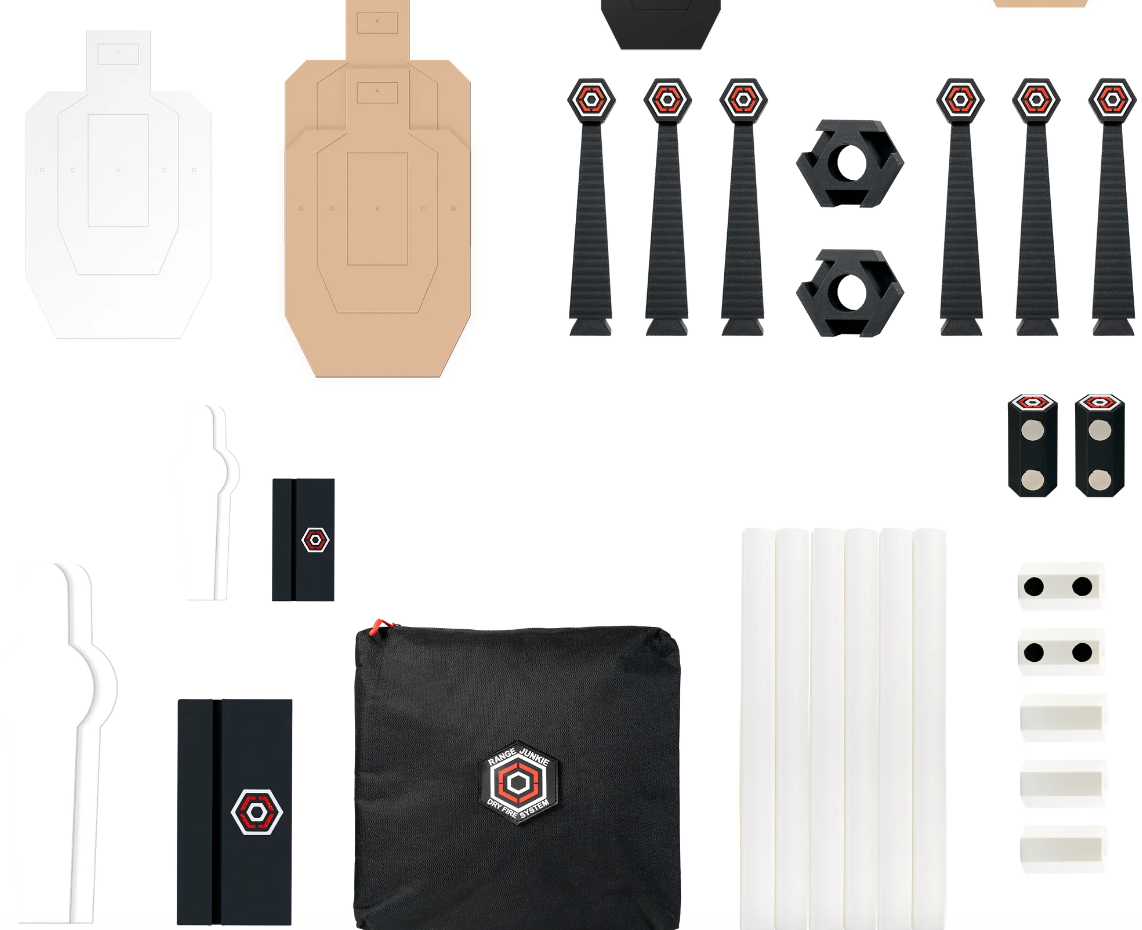
The 1/3 Scale USPSA Hardcover Set includes a 1/3 scale USPSA target and a hardcover set featuring seven configurations.
At $42.00 USD, it provides an accessible way for competitive shooters to add realistic stage elements to their dry fire environment.
The modular design allows shooters to build their training environment around the skills they want to develop. Instead of practicing the same static drill every time, users can create different layouts and incorporate new challenges into their routine.
What's Included?
- 1 × 1/3 Scale USPSA Target
- 1 × 1/3 Scale USPSA Hardcover Set
- 7 hardcover configurations
The system is designed to work as part of the broader Range Junkie Dry Fire System, giving shooters the flexibility to start with individual components and expand their setup over time.
Build a Dry Fire Setup Around Your Goals
One of the most useful aspects of a modular dry fire system is flexibility.
A shooter working on target transitions may want a different layout than someone focusing on movement or stage execution. With a customizable system, the training environment can change as the shooter's goals change.
The Range Junkie system can be used to create drills focused on:
- Target acquisition
- Target transitions
- Reload practice
- Movement
- Position changes
- Stage planning
- Stage execution
- Competition-specific repetitions
Instead of simply practicing shooting motions, shooters can create a training environment designed around the demands of practical competition.
Make Your Dry Fire Practice Count
Dry fire training works best when it is structured and intentional. A few minutes of focused practice can be more productive than simply performing hundreds of rushed repetitions.
Start with a specific objective. Work on one or two skills, perform deliberate repetitions, and gradually introduce more complexity as your technique improves.
For USPSA competitors, incorporating scaled targets and modular stage elements can make that process even more engaging by allowing training to resemble the visual and movement demands encountered during competition.
The Range Junkie Dry Fire System – 1/3 Scale Hardcover Set (USPSA) gives shooters a practical way to build that type of training environment.
Train smarter. Train with purpose.
Explore the Range Junkie Dry Fire System – 1/3 Scale Hardcover Set (USPSA) and start building a dry fire environment around your competition goals.
Be sure to follow Range Junkie on Instagram.